What Are Macros? A Guide to Protein, Carbs and Fat
If you have ever tried to optimize your diet, you have probably asked yourself: exactly what are macros, and why does everyone from fitness enthusiasts to financial planners looking to optimize their grocery budgets keep talking about them? Understanding macronutrients is the foundational step in taking control of your health, energy levels, and even your weekly food spending. While counting calories gives you a broad overview of your energy intake, tracking your macros provides the detailed blueprint for how your body uses that energy. In this comprehensive guide, we will break down the science of macronutrients, explain how to balance them effectively, and show you how to align your nutritional goals with your financial realities.

Macros and calories are not the same thing
To truly grasp what are macros, it helps to look at them through the lens of personal finance. Think of your total daily calories as your overall monthly income. It is a single number that represents the total amount of energy you have to spend or save. However, just knowing your total income does not tell you if you are spending it wisely. You could blow your entire paycheck on entertainment and neglect your rent, just as you could eat 2,000 calories of pure sugar and neglect your body's structural needs.
This is where macronutrients come in. Macros are the budget categories of your diet: housing, groceries, and savings. In nutritional terms, these categories are protein, carbohydrates, and fat. When you track your macros, you are deciding exactly how to allocate your daily caloric budget to ensure every system in your body gets the funding it needs to function optimally.
All calories come from these three primary macronutrients, but they do not all cost the body the same amount of energy to process, nor do they serve the same purpose. For instance, protein has a high thermic effect, meaning your body burns more calories simply digesting it compared to carbohydrates or fat. By understanding the distinct roles of protein carbs and fat, you can move away from viewing food merely as a number on a scale and start seeing it as a functional tool for building a healthier body and a more efficient lifestyle.
Protein: how much you actually need
Protein is the architectural foundation of the human body. Every time you exercise, walk up a flight of stairs, or simply go about your daily life, your muscle tissues experience microscopic wear and tear. Protein provides the essential amino acids required to repair these tissues, making them stronger and more resilient. Beyond muscle repair, protein is vital for the production of enzymes, hormones, and immune cells.

One of the most common questions in nutrition is determining the optimal protein intake. While the baseline recommended dietary allowance (RDA) is often cited as 0.8 grams per kilogram of body weight, this is merely the minimum required to prevent a deficiency. For individuals who are active, strength training, or looking to improve their body composition, the optimal range is significantly higher—typically between 1.6 and 2.2 grams per kilogram of body weight.
From a financial perspective, protein is often the most expensive macronutrient on your grocery receipt. Premium cuts of meat and specialized supplements can quickly drain your budget. However, hitting your targets does not require emptying your wallet. By exploring cheap protein sources like lentils, eggs, Greek yogurt, canned tuna, and tofu, you can easily meet your daily requirements while keeping your grocery costs low. Incorporating a mix of plant-based and affordable animal proteins ensures you get a complete amino acid profile without the premium price tag.
Protein is also highly satiating. A meal rich in protein keeps you feeling full for much longer than a meal composed entirely of simple carbohydrates. This satiety factor naturally prevents overeating and reduces the urge to spend money on mid-afternoon snacks, creating a win-win scenario for both your waistline and your wallet.
Carbs: energy, not the enemy
Carbohydrates have endured decades of bad press, often unfairly blamed for everything from lethargy to weight gain. However, when asking what are macros and how they function, it is crucial to understand that carbs are your body’s preferred and most efficient source of energy. They are the high-octane fuel that powers your brain, your nervous system, and your muscles during high-intensity activities.
When you consume carbohydrates, your body breaks them down into glucose, which is then transported through your bloodstream to be used for immediate energy or stored in your muscles and liver as glycogen for later use. The key to mastering carbohydrates is understanding the difference between complex and simple carbs.
Complex vs. Simple Carbohydrates
- Complex Carbohydrates: Found in foods like oats, brown rice, sweet potatoes, and whole-wheat pasta, these carbs are packed with dietary fiber. Fiber slows down the digestive process, resulting in a steady, sustained release of glucose into the bloodstream. This prevents energy crashes and keeps you fueled throughout the day.
- Simple Carbohydrates: Found in sugary snacks, sodas, and refined white bread, these are broken down rapidly. While they can be useful for a quick burst of energy right before an intense workout, relying on them throughout the day leads to rapid spikes and subsequent crashes in blood sugar.
Dietary fiber, a crucial component of complex carbohydrates, also plays a massive role in gut health and digestion. Most adults should aim for 25 to 30 grams of fiber per day. Furthermore, carbohydrate-rich foods like rice, beans, and potatoes are incredibly cost-effective. They form the bulk of affordable, healthy diets worldwide, proving that fueling your body for peak performance can be done on a very tight budget.

Fat: a little, but essential
For a long time, dietary fat was the ultimate nutritional boogeyman. The low-fat craze of the late 20th century led many to believe that eating fat directly translated to gaining body fat. Today, nutritional science has thoroughly debunked this myth. Dietary fat is an absolute necessity for human survival and optimal health.

Fats play several critical roles in the body. They are essential for the absorption of fat-soluble vitamins (A, D, E, and K). Without adequate dietary fat, your body cannot properly utilize these vital nutrients, regardless of how many vegetables you eat. Fats are also the building blocks of cell membranes and are crucial for the production and regulation of hormones, including testosterone and estrogen. Furthermore, the brain is composed of nearly 60% fat, making essential fatty acids like Omega-3s critical for cognitive function and mental clarity.
When balancing protein carbs and fat, it is important to remember that fat is the most calorically dense macronutrient. While protein and carbohydrates both contain 4 calories per gram, fat contains 9 calories per gram. This means that a small volume of fat packs a significant caloric punch. A tablespoon of olive oil or a handful of almonds can add up quickly.
Focus on incorporating healthy, unsaturated fats into your diet. Avocados, nuts, seeds, olive oil, and fatty fish like salmon are excellent choices. While saturated fats (found in butter, cheese, and fatty meats) can be part of a balanced diet, they should be consumed in moderation. Because fats are calorically dense, they require careful portion control, which is exactly why tracking your macros is so beneficial.
How to work out your own macros
Now that you understand the science, the next logical step is learning how to calculate macros for your specific body and lifestyle. This process involves a bit of math, but it provides a personalized roadmap for your nutrition.
Step 1: Determine your Total Daily Energy Expenditure (TDEE).
Your TDEE is the total number of calories you burn in a day, factoring in your basal metabolic rate (the calories burned just staying alive) and your physical activity level. There are many free online calculators that can estimate this number based on your age, gender, height, weight, and activity level.
Step 2: Set your caloric goal.
If your goal is to maintain your current weight, you will consume your TDEE. If you want to build muscle, you might add a slight surplus (200-300 calories). If your goal is to reduce body fat, you will create a moderate deficit (300-500 calories below your TDEE).
Step 3: Calculate your protein target.
As discussed, a solid target for active individuals is around 2 grams of protein per kilogram of body weight. Multiply your protein grams by 4 to see how many calories this takes up.
Step 4: Calculate your fat target.
A standard recommendation for hormonal health is to allocate 25% to 30% of your total daily calories to fat. Divide that calorie number by 9 to get your daily fat grams.
Step 5: Fill the rest with carbohydrates.
Subtract your protein and fat calories from your total daily caloric goal. Divide the remaining calories by 4 to determine your daily carbohydrate grams.
The Golden Rule of Macros: Consistency matters far more than perfection. Hitting within 5 to 10 grams of your daily macronutrient targets is highly effective; do not stress over hitting the exact single digits every single day.
Once you have these numbers, the real challenge is applying them to your daily life. This is where budget meal planning becomes essential. By knowing exactly what macros you need, you can plan your grocery shopping around cost-effective staples that hit your targets without generating food waste.
If you would rather let the app do this maths, with two profiles worked out step by step, see flexible dieting with GetYourMacros.
Hitting your macros day to day, with GetYourMacros
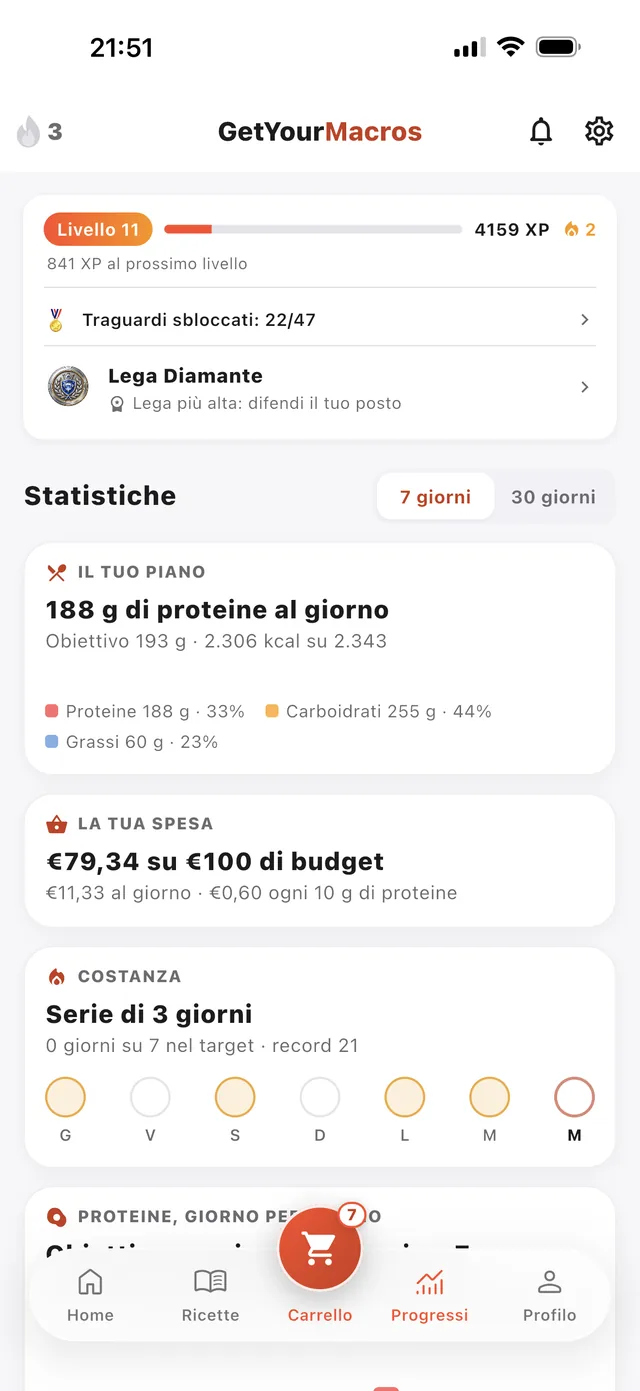
Understanding the theory of macros is one thing, but applying it consistently amidst a busy schedule is another. GetYourMacros is a free iOS and Android app designed to take the friction out of tracking and meal planning. When you download the app, a simple onboarding process sets your daily calorie plus protein, carb, and fat targets—all of which are fully editable to suit your specific needs. You do not even need an account to start.
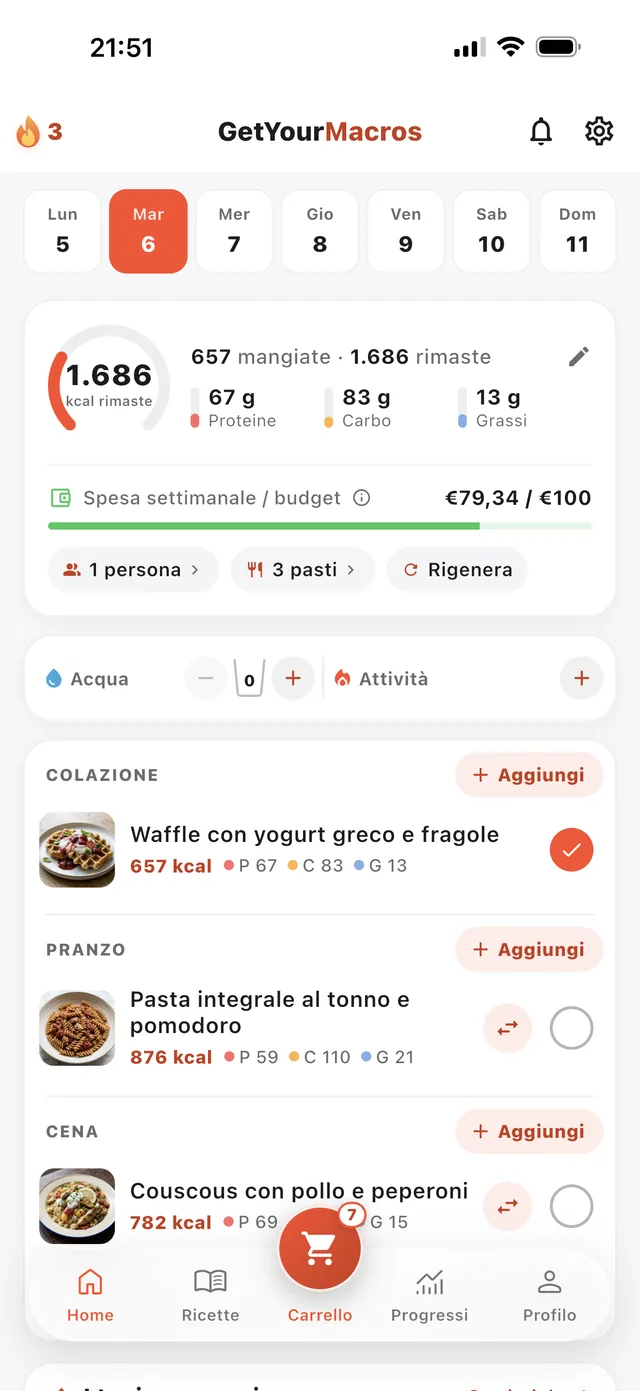
The app provides a weekly meal plan composed from a curated recipe library. You can tailor this to your lifestyle by choosing omnivore, vegetarian, vegan, or pescatarian options, with up to 6 meal slots per day. Each meal clearly shows its calories, macros, prep time, and an approximate cost. If a suggested meal does not appeal to you on a given day, one tap swaps it for another dish of the same course, rescaled to the same calories.
From your meal plan, you get a smart shopping list that you can split across the supermarkets you choose. The app compares your list against buying everything in one store to surface savings, and current community-reported deals are highlighted. Prices are reported by the community—users simply scan a barcode or photograph the shelf tag, which is then read by AI—and each price is tied to a specific supermarket. Where a price is missing, the app shows a clearly labelled estimate. Crucially for your personal finances, the budget counts the cost of the food you actually eat per person cooked for, not the whole-pack receipt total.
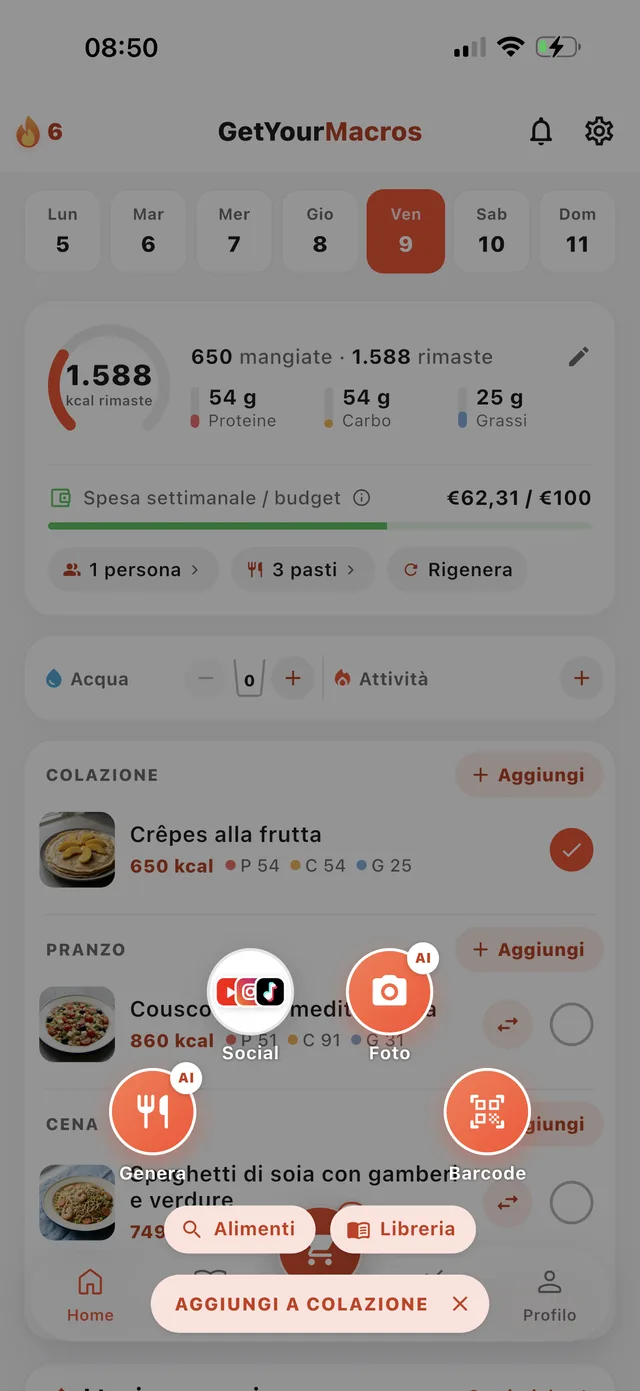
For daily tracking, the food diary lets you log meals effortlessly. You can log by photographing the dish for an AI estimate, scanning a barcode, or searching the extensive food database. You can monitor your daily progress with a visual calorie ring and macro bars, build streaks, and review your 7- and 30-day averages. If you find culinary inspiration online, you can import a recipe by pasting a link from Instagram, TikTok, YouTube, or the web, or simply by pasting a screenshot. The app estimates its macros, lets you keep the recipe, and allows you to tap its ingredients directly into your shopping list. If you start from the numbers you still need instead, you can ask the app for a recipe from your macros.
Finally, consistency is rewarded with gamification elements, including XP, levels, and a weekly league to keep you motivated. The core app is free, with an optional Premium tier available for those looking to access even more tools to master their nutrition.
Want to follow these numbers every day without weighing everything? Discover the GetYourMacros calorie counter.
Start for free
Get a weekly meal plan that respects your macros and your budget.