
A smart shopping list, split across your supermarkets
A smart shopping list is the essential bridge between deciding exactly what you want to eat and actually having those precise ingredients ready in your kitchen. Once your nutritional targets are set and your weekly meal plan is locked in, the next major hurdle is the physical shopping trip itself. Navigating crowded aisles, comparing shelf tags, and ensuring you buy exactly what you need without overspending requires organization. Instead of wandering aimlessly through the store with a handwritten note or a basic text document on your phone, you need a dynamic system. A truly intelligent list organizes your cart based on your specific dietary goals and the actual layout of your preferred stores. It transforms a chaotic chore into a streamlined, data-driven mission, ensuring that every item you place in your basket serves a distinct purpose in your upcoming week of meals.

From a week of meals to a shopping list
The foundation of any successful grocery run is knowing exactly what you will be cooking. Rather than guessing quantities at the store, your weekly grocery list should be a direct reflection of your dietary choices. When a weekly meal plan is composed from a curated recipe library, every single ingredient is accounted for. Because the library is carefully curated, the ingredient requirements are precise and standardized. You are no longer guessing how many bell peppers or chicken breasts you might need for the next few days. Instead, your list reflects the exact requirements of your chosen dishes. You have the flexibility to fill up to 6 meal slots per day, tailoring the volume of food to your specific routine. Whether your dietary preference is omnivore, vegetarian, vegan, or pescatarian, the list adapts to your lifestyle.
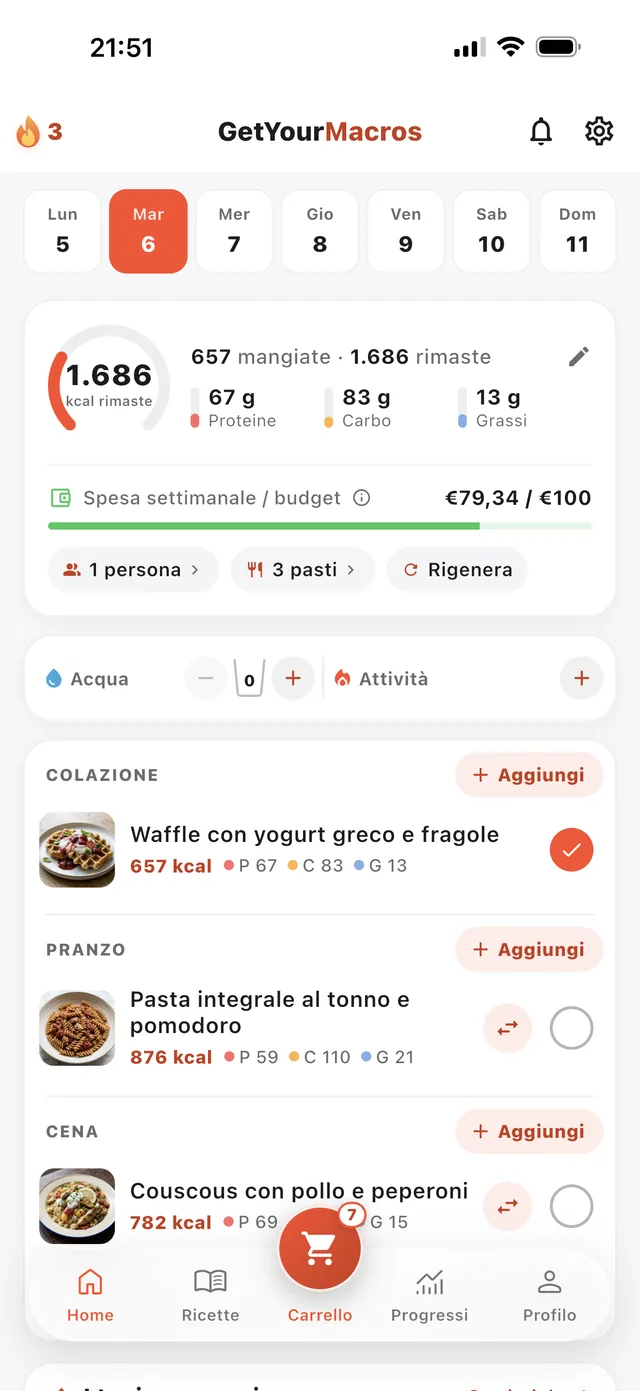
Every meal in the plan shows calories, macros, prep time, and an approximate cost. This visibility is crucial before you even step foot in the store. If you realize a planned dinner takes too long to cook or pushes your budget too high, one tap swaps it for another dish of the same course, rescaled to the same calories. Add the new dish's ingredients to your list with another tap. You never have to manually cross out ingredients or rewrite sections of your list. This dynamic synchronization ensures that when you walk through the automatic doors of the store, you are armed with a highly accurate, customized inventory. You won't find yourself standing in the produce section wondering if you need two onions or four. The list tells you exactly what is required for the meals you have committed to, eliminating the guesswork and the inevitable food waste that comes from buying aspirational vegetables that end up wilting in the crisper drawer. By tying your physical shopping trip directly to your eating schedule, you streamline the entire process and set yourself up for success with your budget meal planning.
Splitting the shop across several supermarkets (and when it pays)
Navigating the retail landscape often means recognizing that no single store excels at everything. A smart shopping list empowers you to take a strategic approach by splitting the shop across several supermarkets. You might prefer one location for its fresh produce and another for its bulk dry goods. The GetYourMacros system allows you to divide your required ingredients across the supermarkets you choose, organizing your trip for maximum efficiency.
This strategy is highly effective because it relies on real-world data. Prices are reported by the community—shoppers just like you who scan a barcode or photograph the shelf tag, which is then read by AI. This crowdsourced database means each price is tied to a specific supermarket, reflecting the reality of the aisles you are actually walking. Where a price is missing, the app shows a clearly labelled estimate, so you are never left entirely in the dark when planning your route. By knowing the approximate cost of items at different locations, you can route your shopping trip to capitalize on the strengths of each store. You might grab your pantry staples at a large discount retailer and your fresh proteins at a local grocer. Furthermore, when evaluating your spending, the budget counts the cost of the food you actually eat (per person cooked for), not the whole-pack receipt total. If a recipe calls for half a bag of rice, your budget reflects that portion, not the cost of the entire bag you purchased at the checkout register. This distinction is vital for accurate financial tracking, as it separates the immediate cash flow at the checkout register from the actual cost of your daily nutrition. It is a cornerstone habit for eating healthy on a budget.
One shop or two: how to decide
While dividing your grocery run can optimize your spending, it introduces logistical complexity. Visiting multiple locations requires more time, transportation, and energy. Therefore, the decision to split your list must be calculated. A reliable shopping list app removes the guesswork from this equation by doing the heavy lifting for you before you even grab your car keys.
Once your plan's ingredients are in your list, the system actively compares that split itinerary against buying everything in one store to surface savings. You can see the exact difference in the projected total right on your screen. If the app indicates that driving to a second location will only yield a marginal difference, you might decide that the convenience of a single stop is worth the premium. You can confidently walk into one store knowing you made an informed choice. Conversely, if the secondary store offers substantial value on your specific protein sources or pantry staples, making that extra stop becomes a highly logical decision.
Time versus value: Always weigh the travel time, fuel, and effort required for a second stop against the overall reduction in your grocery bill. Let the data guide your route so you only make multiple stops when the value clearly justifies the extra trip.
This feature transforms your weekly grocery run from a chore into a strategic mission. You are no longer wondering if you made the right choice; you have the comparative data right in your hand as you push your cart down the aisle, allowing you to shop with absolute confidence.
Deals reported by other shoppers
Supermarket pricing is notoriously volatile. Promotions, weekly specials, and sudden discounts change the landscape constantly, making it nearly impossible for one person to track the best value across multiple locations. This is where a community-driven smart shopping list becomes an indispensable tool for your physical shopping trip.
As users walk the aisles of the supermarkets you choose, they are constantly interacting with the app. When they scan barcodes or photograph shelf tags, they are updating the pricing ecosystem in real-time. Because of this active network, current community-reported deals are highlighted directly on your list. If a specific brand of oats or a particular cut of meat is currently on promotion at one of your selected stores, the app brings it to your attention.
This collaborative approach means you are essentially shopping with the collective awareness of thousands of other users. You do not need to scour physical flyers, clip coupons, or browse multiple store apps before you leave the house. The deals relevant to the exact ingredients on your weekly grocery list are surfaced for you automatically. It allows you to pivot your purchasing decisions on the fly, taking advantage of temporary promotions that align with your nutritional targets without requiring any extra research on your part. If a community member spots a fantastic deal on the exact brand of Greek yogurt you need, you benefit from their discovery instantly.
A weekly shopping list that starts from your macros
A 7-day menu for one person at about 2,000 kcal translates into a list of 26 products.
Building a weekly shopping list for your diet from a meal plan stops you from guessing at the supermarket. With calories and macros already calculated for each portion, you know exactly how many grams of each ingredient you need across the seven days. In one tap, you add all the plan's ingredients to your cart, with quantities of the same ingredient combined.
In our budget meal planning guide, you can find a complete breakdown with daily meals, macros, and shelf prices.
A cheap shopping list: count the food you eat
The food you eat costs €41.83 against a till total of €64.95 at Lidl Italy shelf prices on 13 September 2026 for a 7-day menu of about 2,000 kcal for one person. The difference comes from whole packs across the 26 products required. Grains, oil, or pulses leave leftovers for your future meals. In the app, the weekly budget measures the cost of the food you eat rather than the whole-pack total.
To build a cheap shopping list, it helps to select your staples carefully. You can explore our advice on running a budget diet without giving up dishes you enjoy. To find the most cost-effective protein options, check the nutrient-to-price ratio in our guide to protein per euro.
The GetYourMacros shopping list
To coordinate quantities and prices across your regular shops without relying on memory, you need a smart shopping list based directly on your meal plan. Here is what the GetYourMacros cart does:
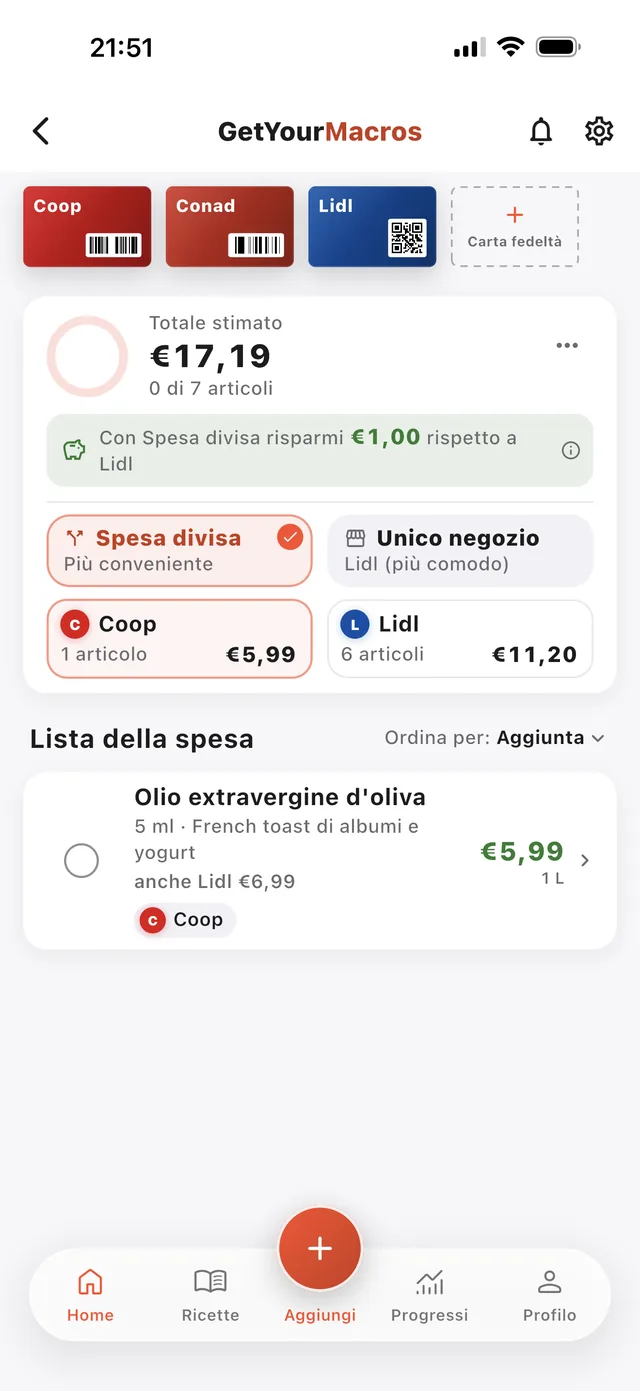
- One-tap addition: one tap on "All the plan's ingredients" adds the whole week's ingredients to your cart, combining quantities of the same ingredient. You can also add a single recipe, search for a product, or scan a barcode.
- Store allocation: each item is assigned to the supermarkets you chose and priced in whole packs, with a total calculated per shop.
- Cost comparison: the app compares splitting the shop across multiple stores with doing it all in one store.
- Promotion badges: imported flyers from Lidl, Eurospin, and Conad, along with catalogue promos, show "On offer" badges on items, with a local alert when a plan or cart ingredient is on offer.
- Community reports: you can check community-reported prices, including a verified shelf-tag photo.
- Loyalty cards: you can show your loyalty cards directly at the till to apply store discounts.
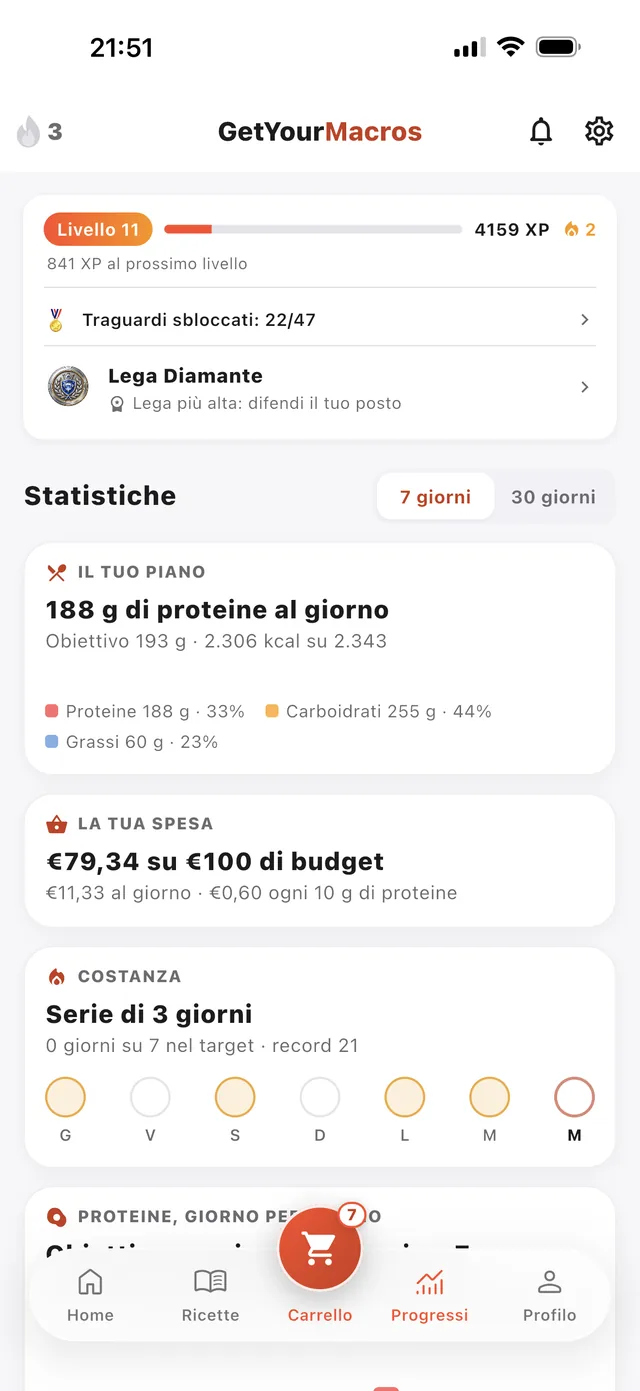
- Spending screen: you can see what you have spent against your weekly budget as you check items off.
Seeing exact amounts before you shop prevents waste and unnecessary purchases. The budget in GetYourMacros measures the cost of the food you eat rather than the whole-pack total, and supermarket prices cover Italy. If you want to manage your daily meals while balancing nutrients and grocery costs, you can set up your flexible dieting plan around your chosen supermarkets and household size.
Frequently asked questions
How does the shopping list app handle missing prices?
Prices are reported by the community when users scan a barcode or photograph a shelf tag. Where a price is missing, the app shows a clearly labelled estimate so you can still plan your trip effectively.

Can I divide my weekly grocery list between different stores?
Yes. In one tap, you add all the plan's ingredients to your cart, and the app assigns them to your chosen supermarkets. Each item is priced in whole packs with a total per shop, comparing a split shop against buying everything in one store.
How do I add my own meals to the smart shopping list?
You can import a recipe by pasting a link from Instagram, TikTok, YouTube, or the web, or by uploading a screenshot. The app estimates its macros, you keep it, and you can tap its ingredients into your list.
Start for free
Get a weekly meal plan that respects your macros and your budget.
Keep reading
Healthy shopping at Eurospin
Protein per euro, full prices and a Lidl comparison, from the October 2026 flyers.
Loyalty cards in the app
Scan the card once and show it at the till, straight from your shopping list.
Healthy shopping at Lidl on a budget
What to buy, with real prices and protein per euro.
Budget meal planning
Read more on the blog.
Eating healthy on a budget
Read more on the blog.