Budget diet: eating well on a fixed weekly budget
A budget diet doesn't mean sacrificing your health, your fitness goals, or the joy of a good meal. For too long, the fitness and wellness industries have pushed the narrative that hitting your macronutrient targets requires premium ingredients, specialized health foods, and an unlimited grocery allowance. The reality is far more accessible. When you understand how to structure your meals around a fixed weekly budget, you unlock the ability to nourish your body without draining your bank account. This guide explores how to transform financial constraints into a strategic advantage for your nutrition, ensuring you can hit your daily targets while keeping your finances firmly in check.
Does eating well really cost more?
There is a persistent myth that nutritious food is inherently expensive. This misconception stems from confusing basic nutrition with luxury marketing. Supermarkets and health food stores are filled with beautifully packaged, organic, exotic superfoods that carry a hefty premium. However, your body does not recognize marketing; it recognizes macronutrients and micronutrients. The essential building blocks of a healthy physique—proteins, carbohydrates, and fats—are abundantly available in some of the most affordable staples in the world.

The secret to cheap healthy eating lies in shifting your focus away from trendy items and toward foundational ingredients. Whole grains, seasonal vegetables, legumes, and versatile protein sources provide exceptional nutritional value for a fraction of the cost of their heavily marketed counterparts. The perceived high cost of a nutritious lifestyle usually comes from a lack of strategy rather than the actual price of the food. When you walk into a store without a clear understanding of your macro requirements, you are far more likely to overspend on impulse buys and pre-packaged convenience items that offer poor nutritional returns.
By prioritizing nutrient density over brand names, mastering eating healthy on a budget is entirely possible. It simply requires a shift in perspective. You must view your grocery shopping not as a chore, but as a strategic procurement of fuel. When you strip away the unnecessary extras and focus strictly on what your body needs to perform and recover, you will quickly find that eating well is one of the most cost-effective habits you can build.
A weekly budget as a constraint, not a regret
Many people view a budget as a restrictive punishment, a set of rules designed to stop them from enjoying the foods they love. In reality, a weekly budget is a powerful framework that provides freedom and clarity. When you establish a firm financial boundary for your weekly nutrition, you eliminate the stress and guilt that often accompany the checkout process. The foundation of eating well on a budget is knowing exactly what your boundaries are before you even begin to plan your meals.
Operating within a fixed weekly budget forces you to become intentional about your food choices. It encourages you to evaluate the nutritional return on investment for every item you consider. Instead of mindlessly tossing items into your cart and hoping for the best, you begin to construct a low cost meal plan that maximizes every single resource. This constraint breeds creativity in the kitchen. You learn to utilize overlapping ingredients across multiple days, reducing waste and ensuring that nothing you purchase goes unused.
Furthermore, a budget diet protects your broader financial goals. By capping your food expenditure, you ensure that your fitness journey does not become a financial burden. This sustainability is crucial for long-term success. A diet that you cannot afford to maintain is a diet that will eventually fail. By embracing the constraint of a weekly budget, you build a resilient, sustainable approach to nutrition that you can maintain for years to come, free from the regret of overspending.
What a dish costs: the food you eat, not the receipt
One of the most common pitfalls in budgeting for food is confusing the total on your grocery receipt with the actual cost of your daily meals. When you buy a large bag of rice, a family-sized pack of chicken, or a bulk container of olive oil, your upfront cost at the register might seem high. However, that receipt represents an investment in your pantry inventory, not the cost of a single dinner.

The Receipt Illusion: Your grocery receipt reflects your inventory investment, not your daily food cost. A true budget diet calculates the exact cost of the ingredients on your plate, giving you an accurate picture of what it actually costs to feed yourself per meal.
To truly understand your food expenses, you must calculate the cost per person for the food actually eaten. If that large bag of rice yields twenty servings, the cost of the carbohydrate portion of your meal is mere pennies, regardless of what the initial bag cost. This distinction is vital because failing to recognize it often drives people away from bulk purchasing, which is one of the most effective strategies for lowering your overall food costs.
When you break down your meals ingredient by ingredient, you gain incredible visibility into where your money is actually going. You might discover that a seemingly cheap pre-made sauce is actually driving up the cost of your dinner, while a bulk purchase of raw ingredients keeps your cost-per-plate incredibly low. This granular approach to tracking costs ensures that your budget diet is based on the reality of your consumption, allowing you to make informed decisions about which recipes truly fit within your weekly financial constraints.
Good protein without overspending
Protein is essential for muscle repair, satiety, and overall health, but it is also notoriously the most expensive macronutrient on the plate. Premium cuts of steak, fresh seafood, and specialized protein supplements can quickly devour a weekly budget. However, hitting your daily protein targets does not require a luxury shopping list. There is an abundance of high-quality protein available that respects your financial boundaries.
The key is to diversify your sources and look beyond the premium meat counter. Eggs, for example, are a nutritional powerhouse, offering complete proteins and essential fats at a remarkably low cost per serving. Dairy products like cottage cheese and Greek yogurt provide excellent slow-digesting proteins that are perfect for keeping you full on a budget diet. Plant-based options are also incredibly economical; lentils, chickpeas, black beans, and tofu offer substantial protein alongside beneficial fiber and micronutrients.
Even when it comes to meat and fish, strategic choices make a massive difference. Opting for chicken thighs over breasts, or utilizing canned tuna and sardines, provides the necessary amino acids without the premium markup. By consistently incorporating cheap protein sources into your daily rotation, you can easily meet your macro requirements. It is entirely possible to build a robust, muscle-supporting diet while strictly adhering to your weekly budget, provided you are willing to look past the most expensive options and embrace the versatility of affordable proteins.
The GetYourMacros take on eating well for less
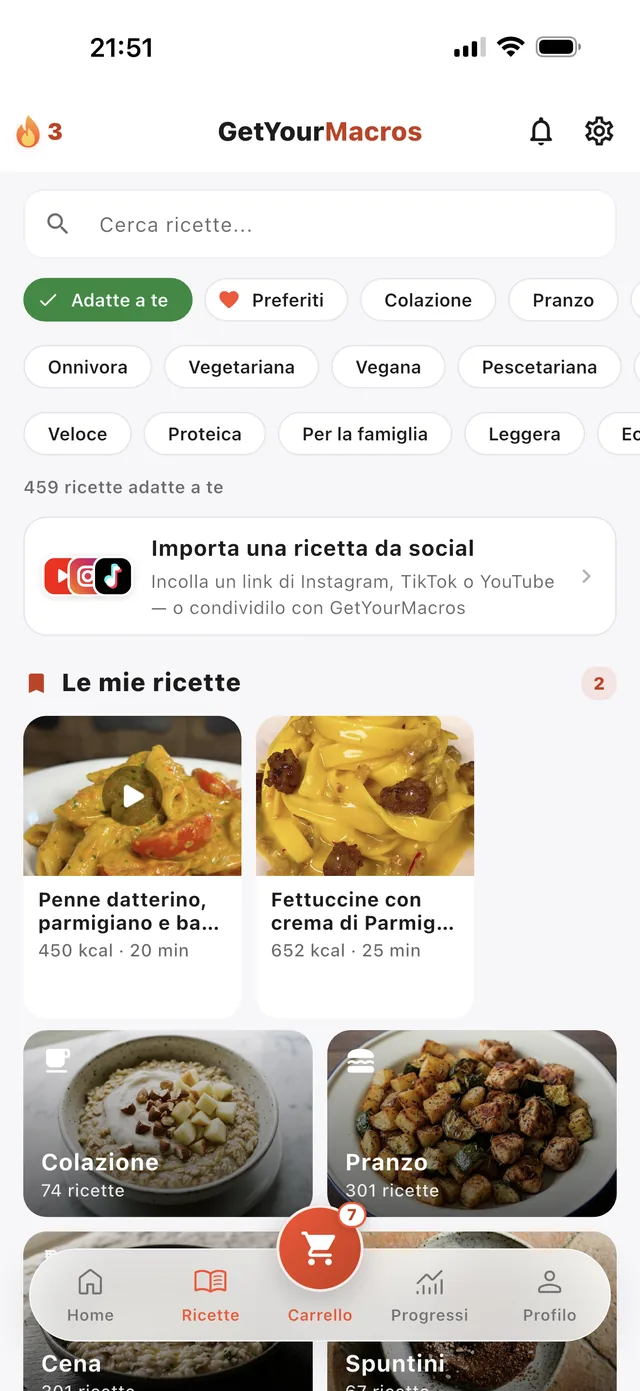
Navigating the intersection of precise nutrition and strict financial boundaries is exactly why GetYourMacros was built. Our free app is designed to help you manage both your macros and your money without the guesswork. Right from the start, a simple onboarding process sets your daily calorie, protein, carbohydrate, and fat targets—which are fully editable to suit your specific goals—and you do not even need an account to get started.
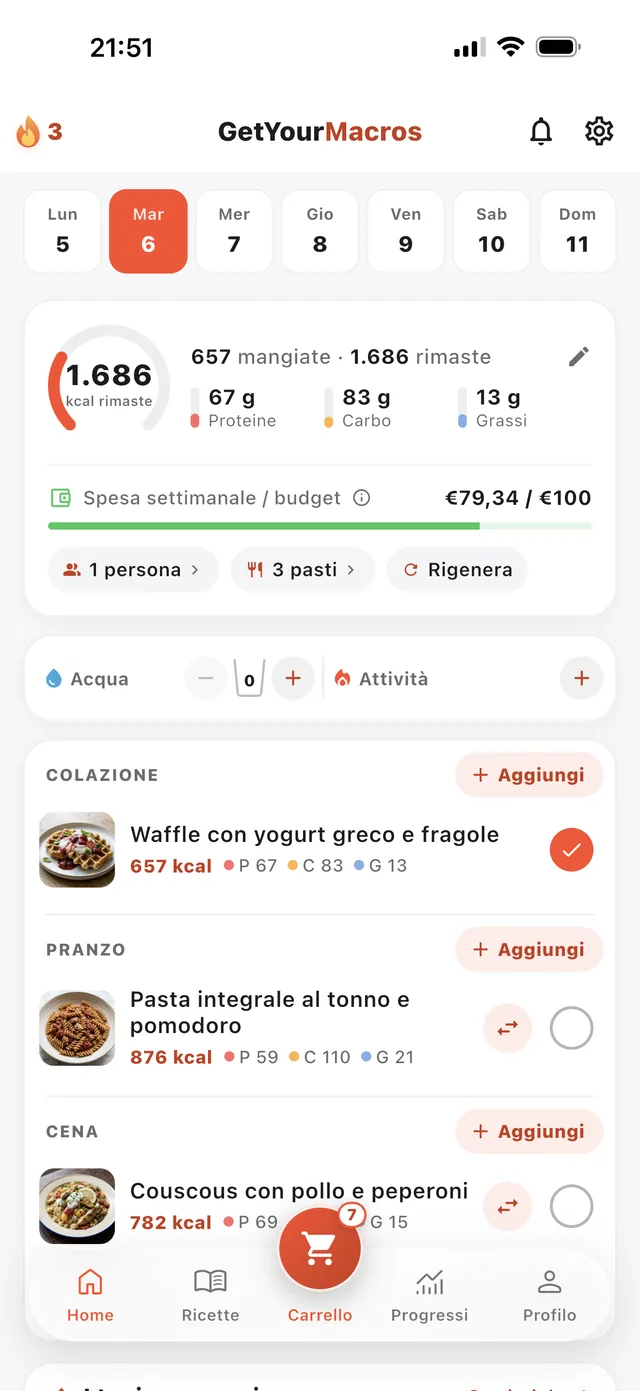
To help you stick to your budget, the app provides a weekly meal plan composed from our curated recipe library. You can choose whether you want an omnivore, vegetarian, vegan, or pescatarian plan. Each day features up to 6 meal slots, and every single meal clearly displays its calories, macros, prep time, and an approximate cost. If a suggested meal does not fit your current budget or taste, one tap swaps it for another dish of the same course, rescaled to the same calories.
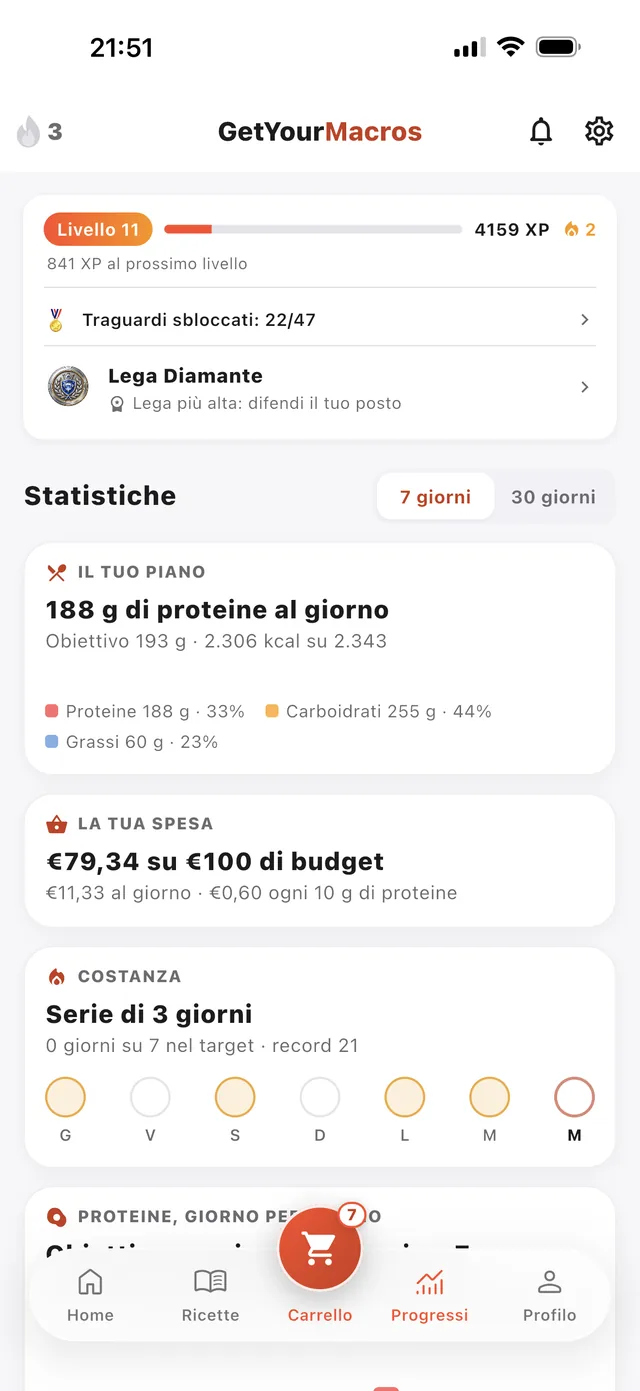
We know that the true cost of a meal is about what ends up on your plate. That is why the app calculates the budget based on the cost of the food you actually eat per person cooked for, not the whole-pack receipt total. Prices are reported directly by the community—you can simply scan a barcode or photograph a shelf tag, which is read by AI—and each price is tied to the specific supermarkets you choose. Where a local price is missing, the app displays a clearly labelled estimate so you are never left guessing. When it is time to shop, your generated list can be split across your chosen supermarkets, and the app compares that split against buying everything in one store to surface potential savings, highlighting current community-reported deals.
Tracking your progress is seamless with the built-in food diary. You can log your meals by photographing the dish for an AI estimate, scanning a barcode, or searching our extensive food database. Your daily progress is visualized through a clear calorie ring and macro bars, alongside streaks and 7- and 30-day averages to keep you accountable. If you find a great budget recipe online, you can import it by pasting a link from Instagram, TikTok, YouTube, or the web, or by uploading a screenshot. The app estimates its macros, lets you save it, and allows you to tap its ingredients straight into your shopping list. Finally, to keep the journey engaging, GetYourMacros includes gamification features like XP, leveling up, and a weekly league. The core app is completely free, with an optional Premium tier available for those who want even more tools to master their nutrition and their budget.
Frequently asked questions
How do I know if a meal fits my weekly budget?
The GetYourMacros app shows an approximate cost for every meal in your plan. This calculation is based on community-reported prices from the supermarkets you choose, counting only the exact cost of the ingredients you actually eat per person.
Can I swap meals if I want to use cheaper ingredients?
Yes, you can easily adjust your weekly meal plan. With just one tap, you can swap any meal for another dish of the same course, rescaled to the same calories, taken from our curated recipe library.
What if I find a cheap recipe on Instagram or TikTok?
You can import any recipe by pasting a link or a screenshot directly into the app. The AI estimates its macros, allows you to save it to your library, and lets you tap its ingredients right into your shopping list.
Start for free
Get a weekly meal plan that respects your macros and your budget.
Keep reading
Flexible dieting with a free app: your first meal plan
Set up your first GetYourMacros meal plan: free limits, calories and macros, meal swaps, shopping list and diary. A practical guide with app screenshots.
Cheap bulking diet
Bulking macros and a 2,976 kcal day for €5.80.
Protein per euro
How many grams of protein €1 buys, across 88 foods.
Eating healthy on a budget
Read more on the blog.
Cheap protein sources
Read more on the blog.